Posts

Showing posts with the label Discussion Blogs

7 Tips – How to Choose the Right Bicycle Saddle for Cycling

Image
Choosing the right bicycle saddle is similar to looking for a comfortable pair of shoes; there are numerous factors to consider—both physiological and with intended use. In this article, I offer  7 Tips to consider how you can choose the right bicycle saddle for your anatomy and style of bike riding. 1 – Seat-Bone Width The first thing to consider is the distance between your seat bones. Your seat/sit bone width determines the ideal width of the saddle you should choose. You can measure your seat bone width using a piece of corrugated cardboard: place the cardboard on a hard bench, and sit firmly on it. Rock forwards slightly to mimic a riding position, and elevate your feet to press your seat bones down onto the cardboard—so that they make an indent. Then, mark the centre of the two indents and measure the distance between the two points. This will give you your seat/sit bone width. A narrow sit bone width would be 100 mm or less, medium 100 to 130 mm, and wide over 1...
Endurance Nutrition – A Cyclist's Shopping List

Image
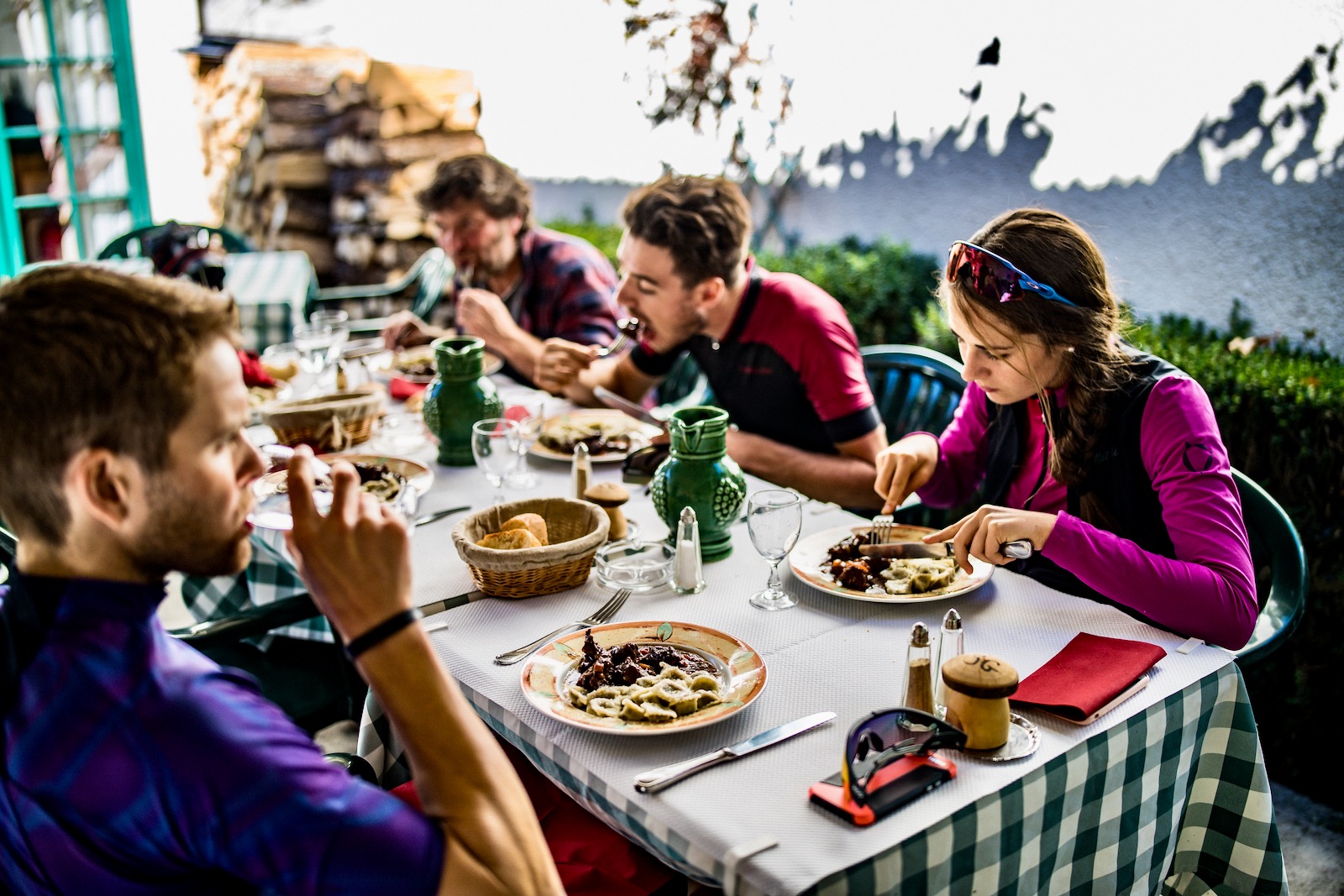
We all know the importance of eating right. What you eat affects your health, your mood, and your cycling performance. You Are What You Eat —  so, your shopping list could be likened to your body's fuel receipt. Are you fuelling right for endurance sport and cycling adventures? In this post, I take a look at items that often feature on my own shopping list. The selection is strongly influenced by insights that I have gained from nutritional experts, as well as ingredients used in recipes from books such as Hannah Grant's ' The Grand Tour Cookbook '. I have split the list out into different nutritional categories — to make sure all bases are covered, and hopefully give a range of options for different dietary preferences. Protein Eggs  — egg yolks are a source of choline, important to reduce muscle fatigue Wild salmon  — fish is a great source of omega 3 fatty acids Frozen plaice fillets  — white fish is a source of low-fat protein Smoked...

Personal Care – Improving Sleep Quality and Recovery

Image
Sleep is the primary pillar of effective recovery—getting enough quality sleep is therefore fundamental to endurance sports performance. I have learned the hard way what a lack of sleep can do to your health, wellbeing, and cycling success; in this post I look at seven of those lessons, and tips on how you can improve your sleep quality and recovery. Getting 7-9 hours of sleep every night is a critical part of recovery. It is during the deep sleep period that our bodies begin to fully repair and rejuvenate themselves, readying themselves for the next effort. Key growth hormones are released when you are in undisturbed sleep—so it makes it a fundamental part of performance improvement. 1 – The Sleep Routine The most important ingredient in getting superior quality sleep on a regular basis, is to create a regular sleeping schedule. You often hear people say "I wake up at the same time, even when I am tired…"—this is natural—it is because our bodies like routine and so we h...

Personal Care – Why Do Cyclists Shave Their Legs?

Image
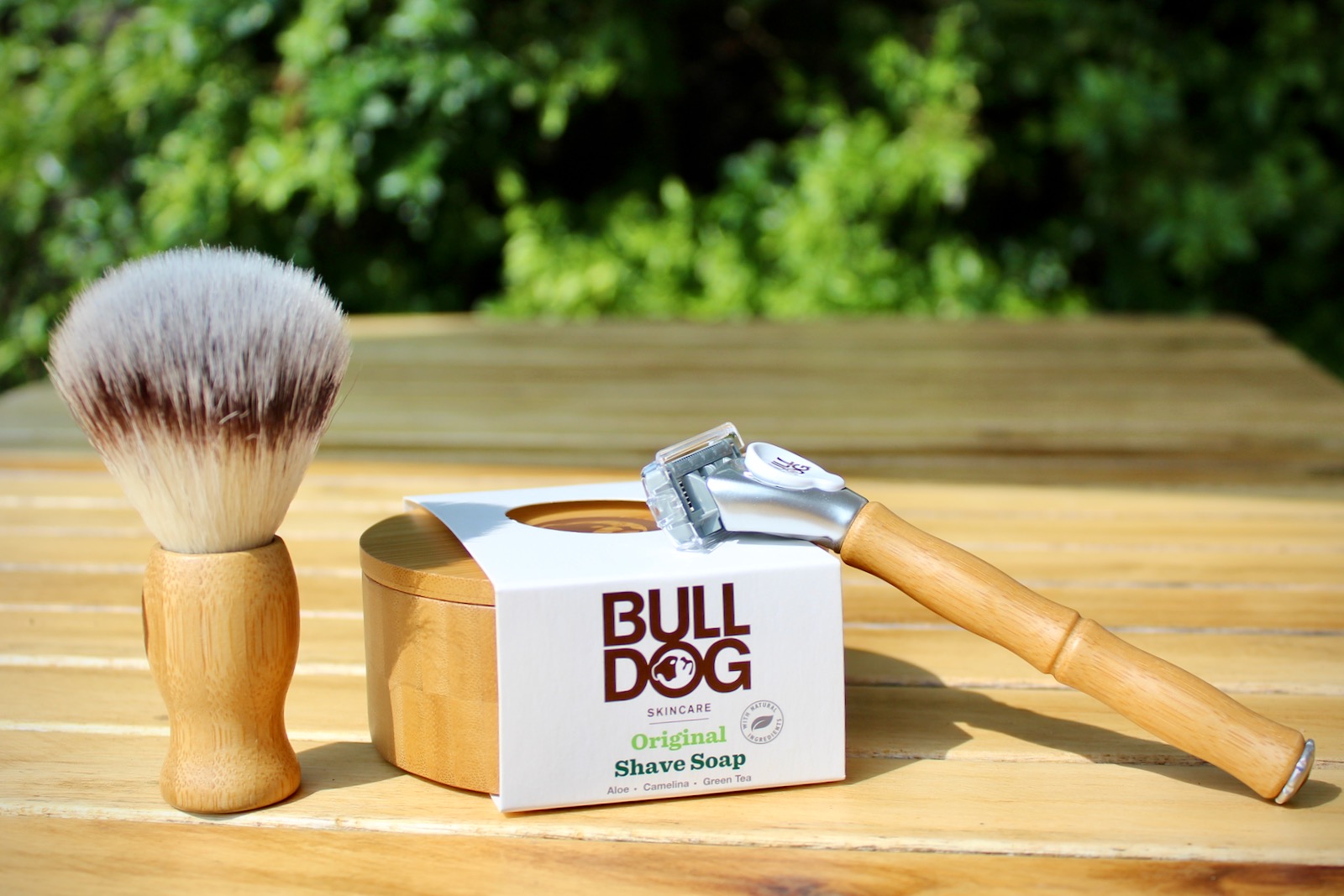
It is an often-asked question by non-cyclists: why do male cyclists shave their legs? Is it for speed, is it for aerodynamics, is it hygiene, or is it style? Or is it just tradition? I have been removing my leg hair for over a decade, and it has become second nature now. Yet, when asked the reason for doing so, it is often hard to pin down an exact motivation. In this blog post, I thought I would try and sum-up my Top 5 reasons for why cyclists shave their legs: reasons from my own personal experience of riding a bike—both clean-shaven and hairy legged. (1) Hygiene For me, the main reason that cyclists should shave their legs is hygiene. If you have ever been tasked with cleaning the alloy wheels of a car, you will know how hard it is to remove the baked-on layer of brake dust, oil, road salt and general road grime. The front wheel of a bike sprays a cyclist's legs with a similar concoction of nasties when they ride on the road, as well as potentially a more rank mixture when...

The Benefits of Cross Training – Does Running Help Your Cycling?

Image
Over the last few years, I have restarted running. Not Forrest Gump style—with hour upon hour spent pounding pavement; but rather the occasional trail run of between 5 to 15 kilometres in length. I have noticed several benefits from building multi-sport cross-training into my routine and lifestyle; both for cycling performance and sporting enjoyment. Does running help your cycling? I believe it does—it opens new doors, it strengthens muscles, and it increases variety. Muscle Strength and Conditioning The first notable benefit is improved muscle strength and a more rounded muscle profile. If you are a dedicated cyclist, you will have built up your cycling specific muscle groups; the problem is you may have neglected the other muscle groups in your body in the process. Secondary 'non-cycling' muscle groups play a key supporting role—they stabilise movement. If you neglect building up these muscles, then you increase the risk of injury. By cross-training through other ...

Game Theory Of The Breakaway

Image
If you have seen the film 'A Beautiful Mind' or you have done a bit of industrial economics, or even gambling, then you might have heard of Game Theory. It is a science that tries to make sense of the decision choices made by individuals, when they are faced with one-shot simultaneous move situations. The application of game theory has found its way into topics from penalty shoot-out decisions, to how easy it is for two firms to collude to raise prices in an industrial market. In this blog, I try to show how game theory can be applied to a breakaway situation in a road race. The classic example of game theory is the 'Prisoner's Dilemma': consider two gang members, stuck in two separate cells at a police station; both prisoners were arrested at the scene of a crime, and had no chance to discuss their alibi with the other. Simultaneously, both prisoners are taken from their cells to separate interview rooms and told: If you confess and y...

Discussion - What is the Best Bike for Cycle Commuting?

Image
Commuting on a bike is a great way to stay fit, relieve stress, and avoid the traffic. What is the best bicycle to commute on though? The most interesting, safe, and versatile option? I commute around 10 hours a week, which amounts to between 250-300 kilometres. I've been putting in these early morning and evening rides for over 5 years now, and have commuted on everything from a mountain bike, through to a single speed road bike. However, I now think that I've discovered the ideal commuting bike… the cyclocross bike. Getting 'cross I wrote a post last year on ' Getting 'Cross ', where I discussed a new found love of the world of mixed-surface riding on a cyclocross bike. What also quickly became evident after a few months of commuting on a cyclocross bike, was that it was an incredibly good bike to use for the job: more interesting, more robust, and more versatile than anything I'd used previously; as well as safer, in many respects. This yea...

Five of the Best Energy and Recovery Drinks for Cyclists

Image
With hundreds of different 'sports drinks' on the market, it can be a bit daunting to the consumer. How do you know what works best for recovery? What tastes best? What is the best value? A lot comes down to personal preference; but, the ingredients and quality of the product are also paramount to getting the most from sports drinks. In this blog post, I've picked out five of my favourites… The 'Everyday Hydration Aid' Drink: O.R.S Hydration Tablets First up, a drink which you can use every day; whether or not you are out on the bike. These simple effervescent electrolyte tablets from O.R.S. are the best that I've tried. They're not too strongly flavoured, and not too acidic; but most importantly, they do a great job of replenishing lost salts. They'll help ward off cramp, and probably encourage you to drink more than if you were using water alone. View O.R.S Hydration tablets at Wiggle (Link) The 'During Exercise' Drink: Optimum...

Going Tubeless on Road Tyres

Image
Don't stop at the end of the tarmac climb. Keep riding. Take that little path that continues on where the tarmac ends. The bumpy bridlepath, which rises skywards. Ride longer. Be stronger. The only problem with taking the road less-travelled, is punctures. Pinch-flats, thorns and flints become your worst enemy. Going tubeless with tyres, is something that I have been doing for quite a while; on mountain bikes.  It is an incredibly effective way of dramatically reducing flats. On my road bike though, I have traditionally remained reliant on inner tubes for inflation. With 2016 being my year for testing out new things though, I've made the change... Tubeless tyres hold a number of advantages over their tubed counterparts. First, there's the puncture prevention. You eliminate the chance of a pinch-flat - when you compress the tyre to such an extent that the bead of the tyre pinches the inner tube, causing snake-bite like cuts. You also eliminate the risk of tubes sudde...